
Congo’s Neighbors Are Finally Leaving. Washington Is Moving In

Foreign armies began pulling out of the Democratic Republic of Congo last week.
Rwanda has started withdrawing some of its defense forces from eastern Congo under a U.S.-brokered agreement known as the Washington Accords. The M23 rebel group, which Rwanda is widely accused of backing, has also withdrawn from some front-line positions and villages.

Days later, Uganda announced its own exit. On March 25, 2026, Gen. Muhoozi Kainerugaba, chief of Uganda’s defense forces, posted on X: “We announce that we are ready to withdraw from all our positions from Lubero to Mahagi in eastern DRC, in coordination with the DRC government.”
Uganda is not part of the Washington Accords. Its leaders simply read the moment correctly. Once Rwanda steps back completely, the spotlight would turn to Uganda. The United States now wants a direct partnership with Congo on minerals and security. Uganda, a longtime American ally, chose to leave on its own terms rather than wait to be pushed.
For the first time in years, Congo’s land and its vast mineral wealth may finally belong to the Congolese. The people themselves could decide what happens to those resources.
The real problem for Congo has rarely been only local militias. It has often been its neighbors. Rwanda and Uganda built strong ties in Washington. They sent troops into Congo under the banner of border security. In practice, they occupied territory and profited from its riches.
After the Washington deal, those neighbors have begun to withdraw. M23 has not left entirely. It still controls large parts of North Kivu and South Kivu, including the cities of Goma and Bukavu, which it seized in early 2025. Fighting continues in many places. But the group has pulled back from positions in Lubero district, including Kipese and about a dozen other front-line villages. It also withdrew from Uvira in South Kivu in January 2026 after capturing it the previous month — a step taken at the direct request of the United States to build trust.
Wherever M23 has held ground, it has set up a war economy. It taxes and licenses mining. The biggest prize is coltan, also called tantalum, a mineral used in phones, electric cars and other electronics. In April 2024, M23 captured Rubaya in North Kivu, one of the world’s largest coltan sources. United Nations experts reported in December 2024 that the group earns at least $800,000 a month there from taxes on production and trade. The minerals are often smuggled into Rwanda, mixed with local output and sold abroad as Rwandan.M23 also controls other mining areas, including Walikale with its tin and gold deposits, as well as sites in Rutshuru, Masisi, Kalehe and parts of South Kivu.
Uganda has faced similar accusations, though its role centers on gold. It has almost no gold deposits of its own, yet its exports have surged to more than $5 billion a year. Much of that gold comes from artisanal mines in Congo’s Ituri Province, where armed groups tax miners before the metal crosses the border. Kampala has become a regional refining hub. This pattern repeats Uganda’s earlier record: during the Congo wars of 1998 to 2003, an international court ordered it to pay $325 million in reparations for illegal resource exploitation.
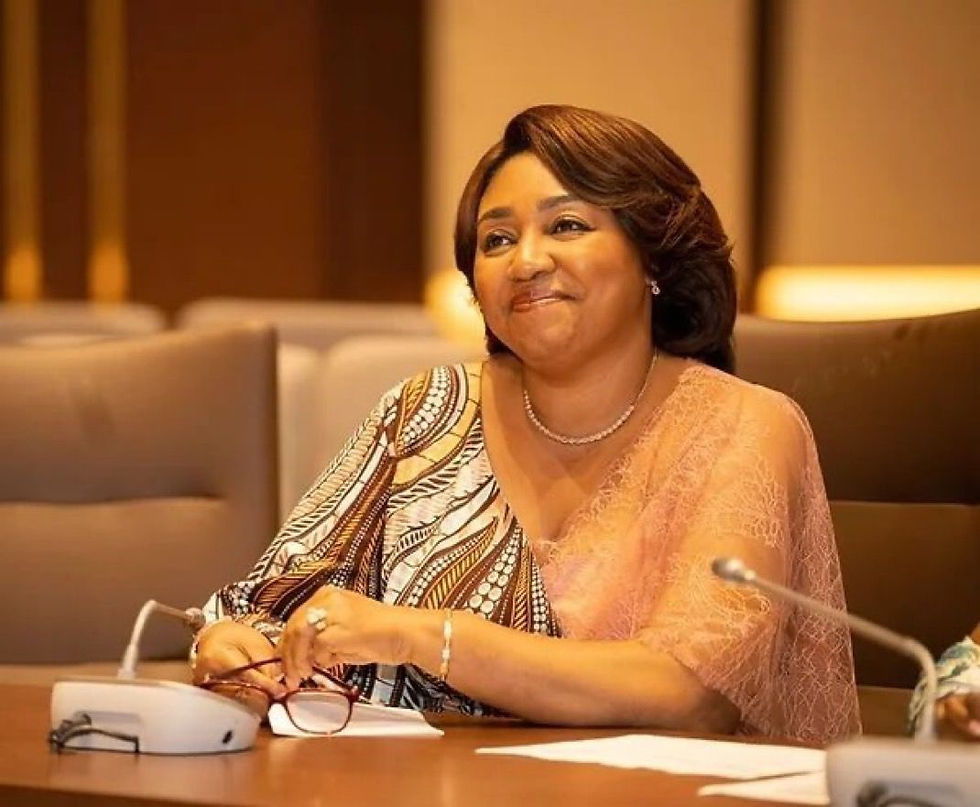
Congo has now turned directly to Washington. President Félix Tshisekedi has received visits from senior U.S. military commanders, including the head of Africa Command. His wife, First Lady Denise Nyakeru Tshisekedi, has been invited to Washington by First Lady Melania Trump. Congo’s army has gained a clear advantage over M23 and Rwandan forces in the east. The partnership covers minerals, security and borders.
Congolese have every reason to celebrate. For too long, neighbors with better access in Washington helped themselves to Congo’s wealth. A direct relationship with the United States could protect the country from outside interference and bring real investment.
Yet history carries a warning. American allies who begin as reformers often cling to power and grow more repressive. Freedoms shrink. Opposition is silenced. Violence against critics is overlooked. Congo lived through this with Mobutu Sese Seko, a longtime Western partner. Uganda’s President Yoweri Museveni and Rwanda’s President Paul Kagame have followed the same path while their forces operated inside Congo.
Washington tends to back one strong leader for years before seeking a change. In the meantime, elections become shows, opponents face arrest or worse, and local suffering draws little notice in the West. Once an ally’s army is strengthened, it may be asked to act as a regional police force in other African countries — repeating the very interference Congo has endured.
Congo now has a rare opening. The withdrawals are an important first step. Real peace, however, will depend on strong institutions at home and careful choices about foreign partners. The Congolese people deserve leaders who answer to them, not to distant capitals.
— Yasin Kakande
Author of The Missing Corpse

Interesting to see movement finally happening here. I wonder if $AVZ will start to see results as a part of this.