
The Ceremony That Measured My Manhood

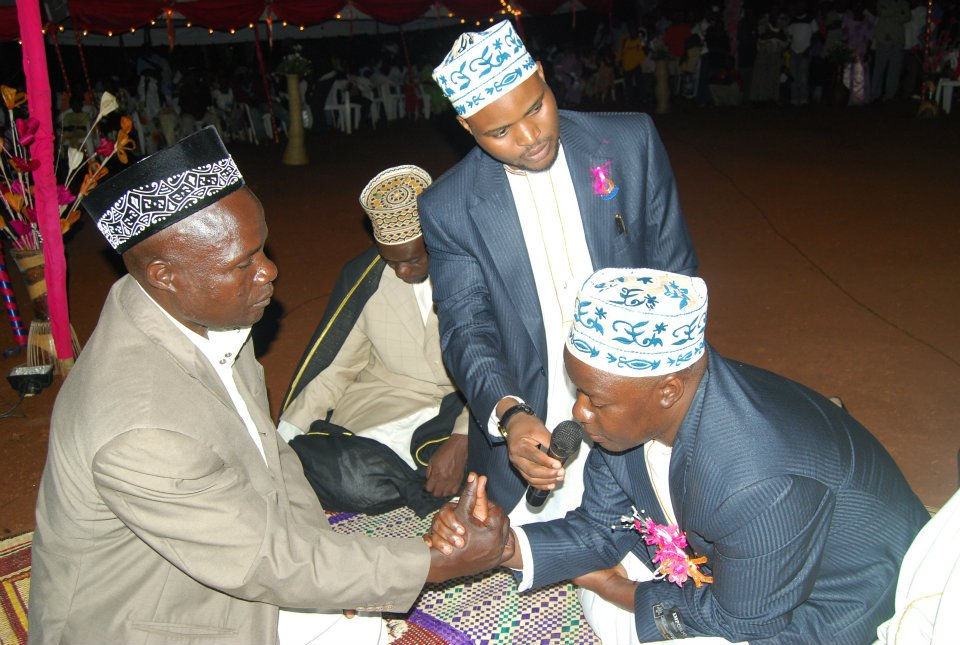
It began, as many serious African matters do, with women deciding a man’s future while he was busy pretending to control it.
Three years earlier, my elder sister Mayi and her loyal friend Aida travelled to Kiboga, a quiet district in central Uganda, to ask for Sauda’s hand on my behalf. In America they would call it an arranged marriage. In our world, it was simply efficiency.
Mayi did not consult me in the dramatic sense. She informed me. In our family she carried religious authority like a badge no one dared question. When she declared that two women could sit before Hajji Ali Mawejje and negotiate dowry in my absence, the discussion ended before it began. She had married a strict Muslim man whose ideas most of us found excessive. But not this one. Some teachings are easier to accept when they benefit you.
Sauda joined me in Dubai soon after. She was beautiful, soft-spoken, and remarkably patient. I talked; she listened. I decided; she agreed. In her quiet world, I was usually right. I thanked Mayi more than once.
For three years, our house had no arguments. We had two children—Latifa and little Taqiudin—and peace seemed permanent. Then one evening, as she placed dinner before me, Sauda asked a question that changed the temperature of the room.
“Do you realise you have not met anyone in my family?”
She did not mean a casual visit. She meant a formal wedding—an introduction, a kwanjula—where families gather, where gifts are displayed, where a man proves he has not stolen someone’s daughter.
I had my reservations. Dubai sounded impressive to villagers back home, but my bank account did not share that reputation. Before I could explain, she raised her hand.
“Don’t even start,” she said, her voice rising. “You simply do not respect my family. They all know it.”
That hurt. Worse still, her relatives had apparently begun to ask what kind of Dubai man could not afford a wedding. My children stopped eating. They did not understand the words, but they recognized danger.
She suggested I fundraise. Or take a loan. Other men had done it. Why not me?
That night I lay awake and did the mathematics of pride.
The late scholar Ali Mazrui once described Africans as living a “triple heritage.” At a wedding, that heritage becomes expensive. There is the traditional introduction—kwanjula. There is the Islamic nikkah. And then there is the Western reception, with suits, speeches, and cake. I reasoned that the nikkah had already been handled by Mayi, our family Islamist-in-chief. If I completed the kwanjula, perhaps I could escape the reception. Sauda agreed.
The most sensitive calculation was money. It would not look dignified for a man working in Dubai to beg publicly for contributions. I took a loan from my office, to be repaid in four months. Pride is expensive; humiliation costs more.
When I arrived in Uganda a week before the function, preparations were already trembling under their own weight. I appointed my former school friend, Kiseka Mudashiru, as chairman of the organizing committee. In a kwanjula, the ceremony is held at the bride’s home. The groom brings gifts—many gifts. They are not mere objects. They are symbols. They measure a man’s seriousness. We had shopped in Dubai. Kiseka completed the Kampala list.
The morning of the ceremony began with rain. Heavy rain. A lorry carrying our gifts slid off the road and crashed into a small house. Negotiations with neighbours replaced prayers. My phone would not stop ringing.
“Give me that phone, Yasin,” Kiseka said, confiscating it like a schoolmaster. “You must look happy. No stress.”
We set off from Wandegeya Mosque, driving the 120 kilometres to Kiboga. Near the town stood a home that looked less like a house and more like a statement. Hajji Mawejje was one of the wealthiest men in the district. He had prepared a function grander than anything I had imagined.
Dignitaries filled the seats. Among them was Ruth Nankabirwa, alongside district leaders and religious figures. Music floated through the compound. The well-known singer Haruna Mubiru performed, admired both for his voice and for his public piety. He had once left his music group after pilgrimage, refusing to perform in clubs that sold alcohol. In Uganda, redemption and rhythm often share a stage.
Then came Sheikh Buyodo, a preacher famous for mixing religion with comedy. He rose slowly, took the microphone, and smiled the smile of a man about to educate the married.
I was seated opposite my father-in-law. My heart pounded. The Sheikh began with polygamy—why Islam allowed it, how it should be practiced wisely, even advising men to mix tribes and races. I glanced at Sauda. This was not the topic I feared, yet it unsettled her more than me. Then he moved to the bedroom.
He spoke about hygiene and intimacy with cheerful detail. The audience applauded, especially my friends from Kampala. I kept my eyes fixed ahead, praying the ground would not open. My father-in-law sat calm. I sat frozen.
When it ended, something unexpected settled in me. Satisfaction.
All my life I had achieved things quietly. I had passed exams without celebration. I had earned two university degrees without throwing a party. Not because I hated joy, but because money sometimes whispered, Not today. This ceremony for Sauda was the first true celebration of my life.
Later, I watched the DVD many times. I proudly show it to guests. Yet there is one problem: my voice. Whenever I held the microphone, nervousness wrapped itself around my throat. I spoke too much, too fast. I sounded like a man apologizing for his own happiness. If I could erase only my speeches from that recording, I would.
My mother did not attend. Culture forbade her from escorting her son to his in-laws. She had come to bid us farewell at Wandegeya, smiling bravely. Mayi, who had secured this marriage from the beginning, also missed the ceremony. She was heavily pregnant with her third child.
In Kiboga, people spoke of that day for months. For them, it was spectacle. For me, it was something else.
It was the day I learned that love is not always quiet. Sometimes it arrives with debt, music, embarrassment, and a preacher discussing your future bedroom in front of your father-in-law. And somehow, in the middle of all that noise, it still feels worth it.
— Yasin Kakande
Author of The Missing Corpse


Comments