
Where My Father Taught Me to Cry

I have only seen my father cry twice in my life, and both times we stood on hallowed ground, the family cemetery, ekijja, in Buikwe Kyagwe.
The first time was when I was just a teenager. We had traveled to the village, as we often did, to visit my grandparents. After exchanging greetings, my father took a small, unmarked path that wound through the family burial grounds, leading us to his village home on the other side. But this time, he stopped. In a hushed voice, he told me he wanted to offer prayers for our departed kin.
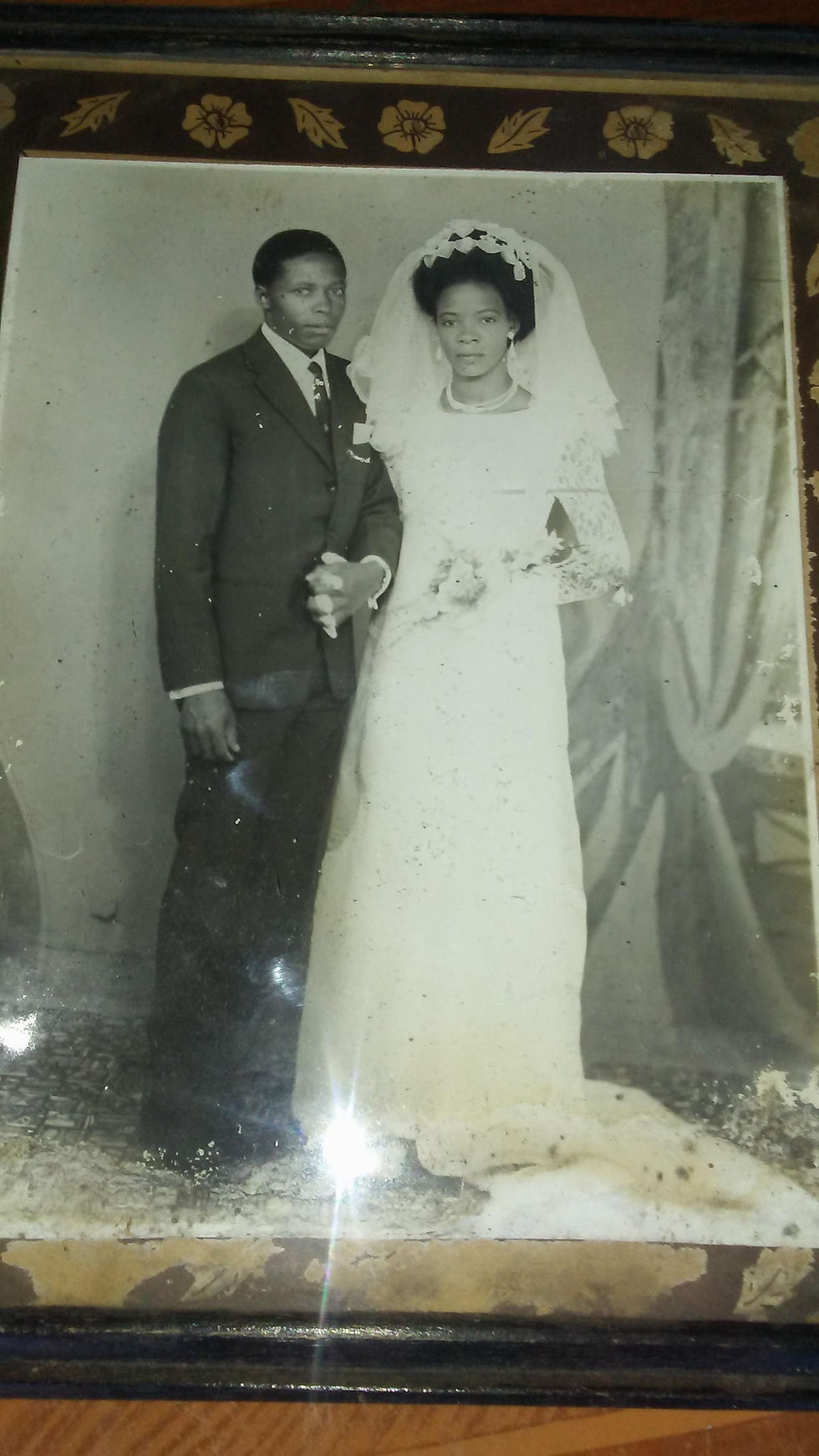
I watched as he moved from grave to grave, standing over resting places of family members I had never known, murmuring words I could not hear. Then he reached the grave of his younger brother, Waswa. His movements slowed. His shoulders carried a quiet grief I had never seen on him before.
My father knelt down and, with his rough, calloused hands, pulled a few blades of grass from the grave. He stayed there in silence, as if every word he wanted to say was too heavy to speak.
It was then that I saw it. A single tear trailed down his face, catching the sunlight before disappearing into his beard. My father, Edirisa Kalule, the strongest man I knew, the man who always warned me not to be “soft like women,” was letting his guard down. He did not hide the tear. He did not wipe it away. He let it fall, as if to show me that here, in this sacred place where we face our own fragility, it is okay to break down. It is okay to cry.
My uncle Waswa died young, in his early twenties, taken from us by a moment of violence that still haunts our family. He was just beginning his life, full of dreams of building something of his own. My father, always the protector, had brought him from the village to the city and helped him set up a small grocery shop in front of our main house. It was a modest start, but it carried the promise of a future.
That shop was my father’s gift to his younger brother, a way of helping him build a life in the city. But all of that ended on one terrible night.
It was a simple object that led to his death, a weighing machine. My father told me years later that it was all the thieves wanted. Just a piece of equipment, yet valuable enough for strangers to kill for. Waswa had worked hard to buy it. It was his pride. So when the thieves came and demanded it, he chose to fight back. He believed he could protect what he had.
But life can be cruel in how it destroys even the smallest dreams.
My father said he heard the gunshot in his sleep. It cut through the night and woke him with a fear only a brother can understand. He did not rush out immediately. He waited, listening, hoping to hear Waswa’s voice, any sign that he was still alive. But the silence was heavy.
When he finally stepped outside, the street was empty. The thieves were gone. The weighing machine was gone. And his brother was gone.
Years later, when I was in university, Auntie Aisha passed away. This time, I was old enough to stand beside my father as we laid her to rest. In our Muslim faith, when the body is lowered into the grave, the people doing it are covered by a cloth. It shields the moment from everyone else. It is a sacred act, done in silence.
As we crouched beneath the cloth, there was a stillness around us. It was just my father, myself, two other men, and Auntie’s body between us. In that small, covered space, I saw something I never thought I would see again.
My father was crying.
The same quiet tears he had shed for Waswa now fell for Aisha. His pain was open, unhidden, laid bare in the presence of death.
These days, when I visit that sacred place, my father lies among the silent souls beneath the earth. He is the reason I come. He is the reason I bring my children here. We walk together between the rows of graves until we reach his resting place.
I ask my children to raise their hands with me, to join in prayer for the grandfather they never truly knew, but who lives on in the stories I tell them and in the love that remains.
Together, we pray. I ask God to bring light into his grave, to make it a place of peace. I ask that his good deeds be accepted, that his sins be forgiven, that his soul be granted mercy. I ask that when we meet again, it will be in a place of joy, where he is at peace and I am at peace.
I say these prayers in Arabic, repeating words that bring me closer to him. As I do, I remember standing beside him in this same place, the only place I ever saw him cry.
The memories rise, and my voice begins to shake. The grief I have held back loosens. I find myself weeping, openly and without shame, letting my children see the love, the pain, and the truth of what this place holds.
I do not hide my tears from them. I want them to understand that strength is not only about endurance. There is also a time to let go, to allow the heart to feel.
I want them to know that one day they will stand here without me.
And if, as they stand by my grave, they feel their throats tighten, if tears rise in their eyes, I want them to know it is all right to let them fall.
Because here, in this place where love and memory meet, strength is not in holding back. It is in allowing the heart to break, in honoring those who came before us, in the tears that connect this world to the next.
— Yasin Kakande
Author of The Missing Corpse


Comments